
Whoa! I remember the exact moment I realized my wallet needed rescuing. My instinct said something felt off about the meta-transactions piling up in my extension; the approvals screen was a blur, and I hadn’t done those swaps. Initially I thought it was just me being paranoid, but then I watched a tiny token drain because of an overly-broad allowance I gave months ago. Okay, so check this out—what follows is practical, slightly opinionated, and based on scrapes, late-night testing, and somethin’ like too many wallet setups.
Really? Yes—browser extension wallets are both convenient and risky. They’re the everyday bridge to DeFi for millions, so usability matters as much as security. On one hand you want a smooth flow for quick swaps, on the other hand you need guardrails when interacting with unfamiliar contracts. Actually, wait—let me rephrase that: you need measured convenience with visible safety checks, not hidden defaults that assume you know what you’re doing.
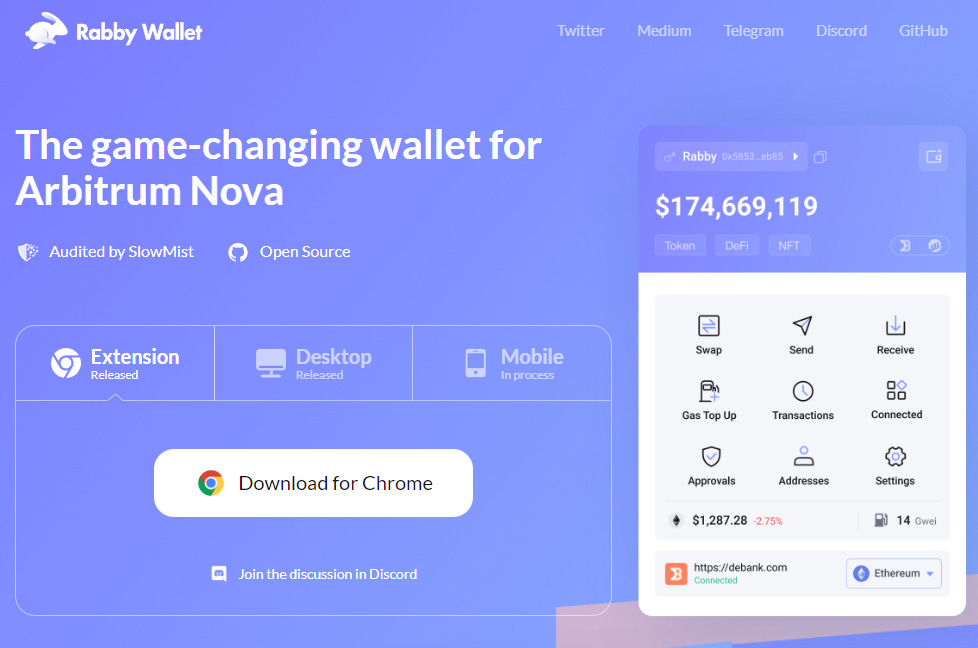
Here’s the thing. I started using Rabby because it pushes a few of those guardrails up front. My first impression was that Rabby treats approvals and connections as first-class citizens, which was refreshing. Hmm… at first glance it’s just another extension, but it layers per-site profiles and clearer transaction previews, and those features change behavior over time.
Wow! The approvals manager is a big deal. Medium-sized transactions get a helpful breakdown. Long, complex spending approvals are clearly flagged so you don’t accidentally give contract X permission to pull funds forever. I’m biased, but that small UX shift saved me from one sloppy approval—so the return on attention was high.
Seriously? Yes again. I won’t pretend it’s perfect though. Some features require a bit of learning—there are toggles and whitelists that you should configure. On the other hand, once you set them up (and you should) your browser wallet behaves more like a personal concierge than a blind signing machine.
At a practical level, here’s how I hardened the setup, step by step. First: create multiple isolated accounts for different risk profiles—one for primary assets, one for test interactions, and one for bridging or risky tokens. Second: pair the extension with a hardware wallet when moving sizable funds; Rabby supports hardware integrations which reduces exposure to extension-only signers. Third: use the transaction simulation and the built-in approval revoker to cut off token allowances that are larger than necessary.
Hmm… a personal aside—one time I used a single account for everything and it bit me. I had a chain of approvals and a malicious dApp triggered an allowance drain during a lazy afternoon. It was a wake-up call, really. After that, I split roles across wallets and added strict approval windows so approvals expire or are manually revoked. That practice alone felt like layering a handrail on a stair I frequently mis-stepped on.
There’s a more technical angle too. Wallet extensions are visible to the browser environment, which means permission hygiene matters. Keep your extension list lean. Disable or remove extensions you don’t use (especially ones that request broad access). Use separate browser profiles for on-chain activity, and avoid storing seeds or private keys in password managers without strong encryption and MFA.
Whoa! Don’t ignore RPC settings. A shady RPC can serve malicious data or replay transactions in edge cases. Use well-known RPC endpoints or your own node for high-value operations; Rabby allows custom RPC configuration so you can control which endpoints your wallet trusts. Also, double-check the chain and token address in the transaction preview—phishing projects sometimes try to imitate token symbols or propose transactions routed through malicious contract addresses.
Something else bugs me about default approval behaviors across many wallets. They often hide the scope of permission, or they present a single “Approve” button without granular options. Rabby surfaces the scope more clearly and offers one-time approvals where possible, which nudges you into safer habits. On one hand it’s a UX problem; on the other hand it’s a social engineering problem wrapped in a button.
I’ll be honest: automation can bite you. Approving smart contract spend limits of “infinite” is convenient for frequent trades but dangerous if a contract is later compromised. My instinct said never approve infinite allowances unless you truly trust a protocol, and that simple rule saved me time and fiat—plus a couple of embarrassing support tickets. So I set defaults to require explicit permission magnitude confirmations and to prefer one-time allowances for most interactions.
Wow! Transaction clarity matters more than gas optimization sometimes. Seeing the exact calldata and the function name (even in plain English) helps me spot anomalies. Rabby tries to present meaningful labels for common contract calls, and when it can’t, it allows you to view the raw data easily, so you can pause and check on-chain explorers before signing. That little friction—annoying as it may be at times—has prevented me from signing dubious multicall bundles.
By the way, if you want to test this yourself, consider installing from a verified source. I usually link to my go-to Rabby installer because it streamlines the process and avoids phishing pages. For the safest direct option, see this: rabby wallet download. Use caution and verify the extension ID and publisher in the store where you’re installing it, okay?
On the topic of third-party integrations, multisigs and smart accounts scale security nicely for larger sums. Multisig wallets force multiple approvals, which reduces single-point-of-failure risk dramatically. Combine that with a hardware signer and you have a compound defensive posture that makes casual exploits much less likely. Though actually, multisigs can slow you down—so they’re not ideal for rapid trading or tiny bets.
There’s a balance to strike between convenience and safety. Use smaller hot wallets for trades, keep the vast majority of assets in cold storage or multisigs, and have a strict approval policy for the hot wallet. Also, log and periodically review your connected sites; remove stale connections so old dApps don’t retain implicit access. It’s boring maintenance, sure, but it’s effective.
Hmm… counterintuitively, the best security features are often the ones you barely notice after setup. Granular approvals, transaction previews, and sane defaults quietly reduce risk. But you should still test recovery procedures—seed phrases stored in a safe, hardware wallet passphrases, and tested recovery on another device to ensure you can restore access in a crisis. That part is easy to skip, and it’s a glaring blind spot for many users.
Also, don’t overlook social engineering. If someone messages you about “urgent wallet problems,” slow down. I’d rather be thought paranoid than emptied. Ask questions, verify links by typing known domains, and prefer official channels for support. Scammers prey on urgency; your pause is your firewall.
One bit of nuance: browser extension architecture will likely evolve toward more sandboxing and permissions transparency. Projects like Rabby are part of that push, but the ecosystem is still fragmented. So, learn the tools that put more context in front of you rather than less. That mental model—assume less, verify more—will keep you out of trouble more than fancy features alone.
On a practical checklist you can use right now: 1) Split accounts by risk, 2) Use hardware for large transfers, 3) Never accept infinite approvals blindly, 4) Revoke allowances routinely, 5) Use a dedicated browser profile for DeFi, and 6) Verify RPC and extension sources. It’s not exhaustive, though… it’s a start, and it’ll catch a lot.
I’m not 100% sure which new exploits will pop up next, but habits matter most. Habits are what protect you when the unexpected arrives. So train the tiny habits that make you pause before signing, and make your wallet require explicit intention more often than implicit trust.
Quick Tips & Why They Matter
Wow! Small choices add up. Use one-time approvals for low-value trades. Keep top-tier funds in cold or multisig setups. Revoke token allowances you no longer need. Run transaction simulations for unfamiliar calls.
FAQ
Is Rabby safe for beginners?
Yes, with caveats. It’s designed to make approvals and connections clearer, which helps beginners avoid common mistakes, though novice users should still follow basic safety steps like using separate accounts and hardware wallets for large sums.
Should I use a hardware wallet with Rabby?
Absolutely for significant holdings. Integrating a hardware signer adds a physical layer of protection that prevents browser-based exploits from signing transactions without your physical approval.
What about mobile or other wallets?
Mobile wallets have different threat models—SIM swap and device compromise risks are higher—so choose the platform that matches your threat profile and move large balances into the safest option you can manage (cold storage, multisig, etc.).


